
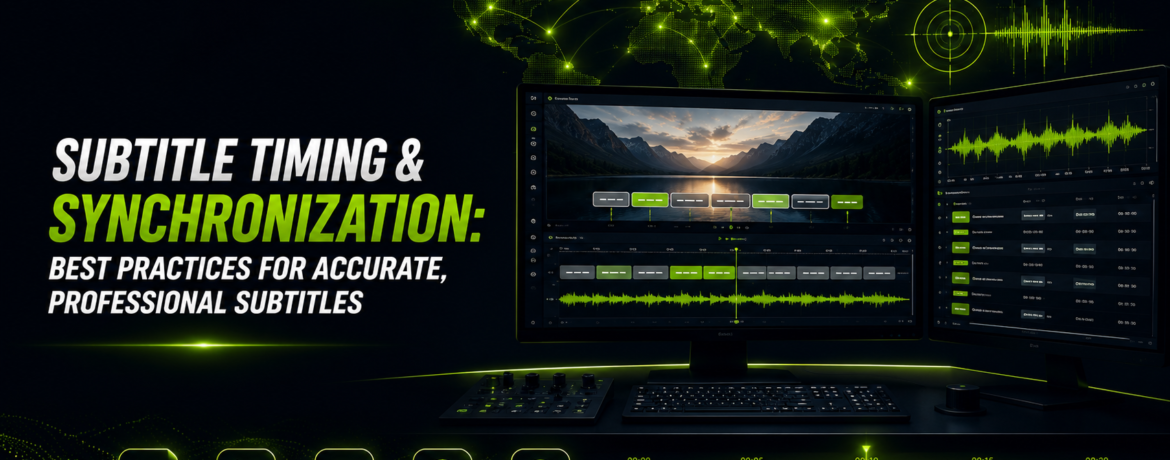
Subtitle Timing & Synchronization: Best Practices for Accurate, Professional Subtitles
Estimated Reading Time: 9 Minutes
Last Updated: June 2026
Quick Summary
Accurate subtitle timing and synchronization are essential for creating a seamless viewing experience. Even perfectly translated subtitles can become ineffective if they appear too early, disappear too quickly, or fail to match the speaker’s dialogue. This guide explains how professional subtitle timing works, why it matters, and the best practices used by broadcasters, streaming platforms, and localization teams to produce high-quality subtitles.
Table of Contents
1. What Is Subtitle Timing?
2. Why Synchronization Matters
3. How Professional Subtitle Timing Works
4. Reading Speed and Subtitle Duration
5. Common Timing Mistakes
6. Best Practices
7. Frequently Asked Questions
8. Conclusion
Introduction
A viewer rarely notices perfectly timed subtitles, but they immediately notice poor ones. When subtitles appear before a character speaks, remain on screen long after the dialogue ends, or disappear before they’ve been read, the viewing experience quickly becomes frustrating.
Subtitle timing, also known as subtitle synchronization or spotting, is one of the most important stages of subtitle production. It ensures that every subtitle appears and disappears at precisely the right moment, allowing viewers to comfortably read the text while following the action on screen.
Professional timing is not simply about matching dialogue with timestamps. It requires an understanding of reading speed, scene changes, natural speech patterns, subtitle length, and viewer behavior. The result is subtitles that feel effortless to read and never distract from the content itself.
What Is Subtitle Timing?
Subtitle timing is the process of assigning accurate start and end timecodes to each subtitle. These timecodes determine exactly when a subtitle appears on screen and when it disappears.
The objective is to synchronize subtitles naturally with the spoken dialogue while giving viewers enough time to read the text without rushing.
Professional subtitle timing takes multiple factors into account, including:
• Dialogue speed
• Scene transitions
• Subtitle length
• Reading speed
• Speaker pauses
• Visual pacing
Instead of treating subtitles as individual captions, professional subtitle editors consider the overall rhythm of the video. Every subtitle should support the story rather than interrupt it.
Why Synchronization Matters
Synchronization directly affects how viewers process both the visual and spoken elements of a video. If subtitles appear too early, viewers may read important information before it is spoken. If they appear too late, viewers must divide their attention between reading and following the action.
Accurate synchronization creates a natural flow between dialogue and subtitles, allowing viewers to focus on the story rather than the captions.
Well-timed subtitles provide several benefits.
• Improve viewer comprehension.
• Increase accessibility.
• Reduce viewer fatigue.
• Enhance multilingual communication.
• Improve overall production quality.
• Support professional broadcast and streaming standards.
For businesses distributing content globally, accurate synchronization also reflects positively on brand quality and professionalism.
How Professional Subtitle Timing Works
Professional subtitle timing follows a structured workflow rather than relying on automatic software alone. Experienced subtitle editors review each scene carefully to ensure subtitles are synchronized with both dialogue and visual pacing.
The process generally includes the following stages.
Dialogue Analysis
Editors first review the audio to identify speech patterns, pauses, overlapping conversations, and changes in speaker.
Spotting
Each subtitle is assigned precise in and out timecodes that align with the beginning and end of the spoken dialogue.
Subtitle Segmentation
Long sentences are divided into readable subtitle units while preserving natural grammar and meaning.
Timing Adjustments
Editors fine-tune subtitle durations to balance synchronization with comfortable reading speeds.
Quality Control
Finally, subtitles are reviewed to ensure smooth transitions, accurate timing, and consistency throughout the project.
This workflow helps produce subtitles that feel natural across films, documentaries, corporate videos, online courses, and streaming platforms.
Reading Speed and Subtitle Duration
One of the biggest challenges in subtitle timing is balancing dialogue with reading speed. Even when subtitles are synchronized perfectly, viewers still need enough time to comfortably read the text.
Professional subtitle editors carefully adjust subtitle duration based on the amount of text displayed, the complexity of the language, and the pace of the scene.
| Timing Factor | Why It Matters |
|---|---|
| Reading Speed | Allows viewers enough time to read naturally. |
| Subtitle Length | Prevents overcrowded subtitles. |
| Scene Changes | Avoids subtitles lingering across unrelated shots. |
| Dialogue Pace | Keeps subtitles synchronized with speech. |
| Natural Pauses | Improves readability and viewer comfort. |
Rather than applying fixed timing rules, professional subtitle production combines technical standards with editorial judgment to achieve the best viewing experience.
Common Subtitle Timing Mistakes
Even with modern subtitle software, timing mistakes are common when subtitles are created without professional review. Small synchronization issues may seem insignificant during editing, but they can quickly distract viewers and reduce the overall quality of a video.
The most common subtitle timing mistakes include:
• Subtitles appearing before dialogue begins.
• Subtitles remaining on screen after the speaker has finished.
• Displaying too much text within a short period.
• Ignoring natural pauses in conversation.
• Splitting subtitles during scene changes.
• Overlapping subtitle cues.
• Using inconsistent subtitle durations.
These issues force viewers to divide their attention between reading subtitles and watching the visual content, creating an uncomfortable viewing experience.
Subtitle Spotting Guidelines
Subtitle spotting is the process of determining exactly when each subtitle should appear and disappear. Professional spotters follow established guidelines to ensure subtitles remain easy to read while matching the rhythm of the dialogue.
Effective subtitle spotting involves:
• Starting subtitles as close as possible to the beginning of speech.
• Removing subtitles shortly after dialogue ends.
• Respecting natural pauses in conversation.
• Avoiding subtitle changes during rapid scene cuts whenever possible.
• Maintaining consistent reading speed throughout the video.
• Keeping subtitle durations balanced across the project.
Successful spotting is a combination of technical precision and editorial judgment. Rather than following rigid rules, experienced subtitle editors adjust timing based on the pacing and emotion of each scene.
Professional Best Practices for Subtitle Synchronization
High-quality subtitle timing is achieved through a combination of experience, technical standards, and careful quality control. Professional subtitle teams follow consistent workflows that prioritize readability without interrupting the viewer’s experience.
Recommended best practices include:
• Review the entire video before beginning subtitle timing.
• Prioritize readability over strict word-for-word synchronization.
• Keep subtitle timing consistent throughout the project.
• Adjust subtitles around scene transitions where necessary.
• Break long sentences into logical subtitle segments.
• Perform multiple rounds of quality assurance before delivery.
• Test subtitles on the destination platform whenever possible.
How AI Is Changing Subtitle Timing
Artificial intelligence has significantly accelerated subtitle production by automatically detecting speech and generating draft timecodes. This technology can reduce production time, particularly for long-form content such as webinars, podcasts, and corporate training videos.
However, AI still has limitations. Background noise, overlapping dialogue, accents, emotional pauses, and rapid conversations can all affect synchronization accuracy.
For this reason, many production companies now use a hybrid workflow.
• AI generates an initial subtitle draft.
• Professional subtitle editors review the timing.
• Reading speed is optimized.
• Line breaks are refined.
• Quality control ensures platform compliance.
This combination delivers both efficiency and professional quality.
Frequently Asked Questions
What is subtitle synchronization?
Subtitle synchronization is the process of matching subtitles with spoken dialogue so that text appears and disappears at the correct moment, creating a natural viewing experience.
Why is subtitle timing important?
Proper timing improves readability, prevents viewer distraction, and ensures subtitles accurately reflect the pace of the conversation.
Can AI automatically synchronize subtitles?
Yes. AI tools can generate draft synchronization, but professional review is still recommended to refine timing, correct errors, and improve readability.
What is subtitle spotting?
Subtitle spotting is the process of assigning accurate in and out timecodes to each subtitle while considering dialogue, scene changes, and reading speed.
Does subtitle timing affect accessibility?
Absolutely. Poor synchronization makes subtitles difficult to follow, particularly for viewers who depend on captions or subtitles to understand video content.
Conclusion
Subtitle timing and synchronization are fundamental to producing high-quality subtitles that feel natural and effortless to read. Even the most accurate translation can lose its impact if subtitles are poorly synchronized or difficult to follow.
Professional subtitle timing combines technical precision with editorial expertise, ensuring subtitles align naturally with speech, maintain comfortable reading speeds, and support the overall storytelling experience. Whether your content is intended for broadcasters, streaming platforms, corporate training, or global audiences, investing in accurate synchronization significantly improves accessibility, viewer engagement, and production quality.
Leave A Comment